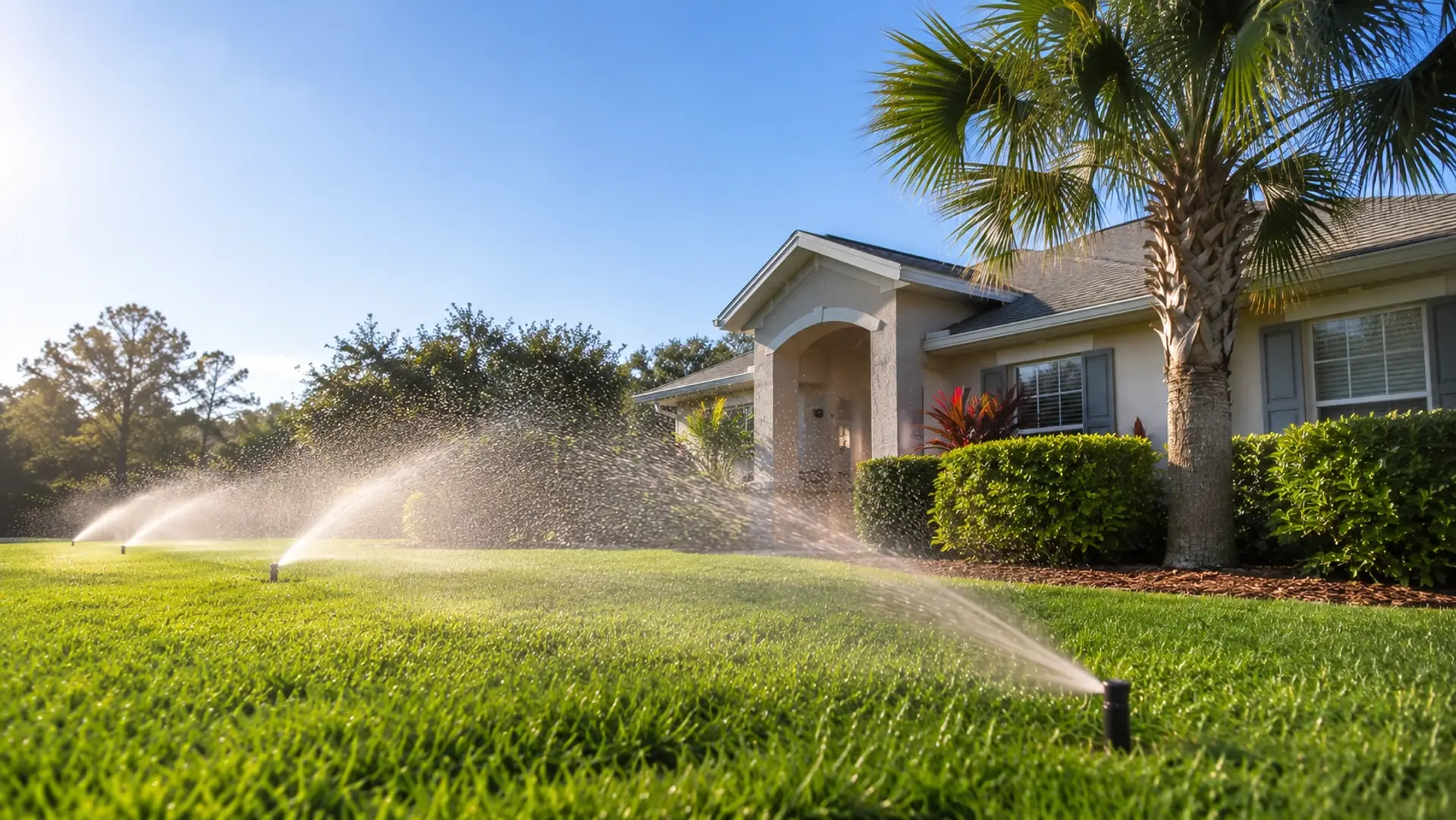
Drip Irrigation for Beds and Hedges in Port Orange, FL
Beds Hedges Palms Containers
Spray heads are made for lawns. Shrub beds, hedges and palms do better with drip irrigation, which delivers water slowly at the base of each plant. We install new drip zones and repair the ones that have stopped working.
(386) 357-3675Signs your beds need drip or a drip repair
Drip irrigation uses flexible tubing with small emitters that release water a little at a time, right where the roots are. Because nothing is thrown into the air, very little is lost to wind or evaporation, and leaves stay dry, which helps keep fungal problems down on plants like azaleas.
Converting a bed from spray to drip is one of the most practical upgrades for a Port Orange yard. Beds along the house stop splashing the walls, hedges along a fence get even water from end to end, and the zone can run on its own schedule instead of sharing one with the lawn.
- Spray heads in beds soaking the house, windows or walkway
- Shrubs that wilt while the lawn next to them looks fine
- Dry ends on a hedge row and wet roots at the other end
- Drip tubing that has been cut, chewed or pulled out of place
- Emitters that no longer drip or have popped off the line
- A drip zone that runs but leaves the mulch dry
How we install and repair drip
What we do
Good drip work comes down to the right pressure, clean water and emitters sized to the plants. We cover all three.
Map the beds
We note which plants need more water and which need less, how much sun each bed gets and where the nearest valve is.
Set up the control parts
Drip runs at much lower pressure than spray, so each drip zone gets a filter and a pressure regulator at the valve. That protects the tubing and keeps emitters from clogging.
Lay tubing and emitters
We run tubing along hedges and around each plant, under the mulch, with emitter flow matched to the plant. Palms and large shrubs get more emitters than small groundcover.
Flush, test and schedule
We flush the lines, check every emitter and set a run time that suits slow, deep watering rather than short bursts.
Drip in sandy Port Orange beds
Sandy soil lets water drop straight down instead of spreading sideways. In a Port Orange bed that means a single emitter wets a narrow column of soil, so plants often need two or more emitters spaced around the root zone. We plan emitter placement around how the soil actually behaves rather than using a one-size layout.
Hedges such as viburnum and podocarpus, foundation plantings of azaleas and the palms that line many driveways all suit drip well. Mulch helps hold moisture in the sand and protects the tubing from sun damage. We tuck tubing under mulch and stake it down so it stays in place when beds are trimmed or raked.
Before you call about drip
Run the drip zone for ten minutes, then pull back the mulch at a few plants and feel the soil. Damp soil around the base means the zone is working. Dry soil means a clog, a break or a pressure problem. Look along the tubing for spots where water is pooling or spraying, which usually means a cut or a missing emitter.
If your beds are still on spray heads, take a few photos of the beds while the zone runs. Water on walls, windows and walkways is the clearest sign that a bed would do better on drip, and the photos help us plan how to convert it.
It also helps to know what is planted. Azaleas, hedges, palms, annual beds and container plants all take different amounts of water, so a rough list of what grows in each bed lets us size the emitters before we arrive.
Need drip irrigation in Port Orange?
Tell us what is going on. We will set up a visit and give you a price before any work begins.
Drip Irrigation for Beds & Hedges: common questions
Straight answers
Can I convert my spray zone to drip?
Usually, yes. If a zone only waters beds, we can cap the spray heads and run drip from the same valve with a filter and a pressure regulator added. If a zone mixes lawn and beds, we may suggest splitting it.
How long should a drip zone run?
Much longer than a spray zone, because drip applies water slowly. Run time depends on emitter flow, plant size and the season. We set a starting schedule and explain how to adjust it.
Do drip systems clog?
They can, especially on well or reclaimed water. A filter at the valve and an occasional flush prevent most clogs. Emitters that do clog are inexpensive to replace.
Is drip allowed on my watering days only?
Some watering rules treat low-volume irrigation differently from sprinklers, and the details can change. Check the current county and water management district rules, or ask us when we set up the schedule.
Will drip work for palms?
Yes. Palms do well with several emitters placed around the trunk at the edge of the root ball. Larger palms need more water than shrubs, so we size their emitters accordingly. Newly planted palms need extra water while they establish, and we can set that zone to taper off over the first few months.
Related services
New Systems & Rezoning
New systems and rezoning planned around sun, shade, soil and plant type.
Learn more →Sprinkler Head & Leak Repair
Cracked heads, broken lines, soggy spots and brown patches traced to the cause and fixed.
Learn more →Timer, Controller & Rain Sensor Repair
Controllers that ignore the schedule, rain sensors that never shut off the system, and Wi-Fi upgrades.
Learn more →Request an Estimate
Send a request and we will call to talk through what the system is doing, then set up a visit at a time that suits you. Estimates are free, and you approve the price before any repair begins.
Prefer to talk now?
(386) 357-3675Serving Port Orange, South Daytona, Daytona Beach, Daytona Beach Shores, Ponce Inlet, New Smyrna Beach, Samsula and the Spruce Creek area.